



Back to overview
Expert case by
Ian

McKinsey Digital / BCG Platinion: Oil & Gas Upstream Technology

Difficulty: Advanced
Interviewer-led
4.3
< 100 Ratings
Times solved: 18.4k

Case Prompt:

[PLEASE NOTE: This is a technically difficult case and should only be completed by those coming in as a Technology specialist, i.e. recruiting for McKinsey Digital, BCG Platinion, etc.]

Our client is a multinational oil and gas company. While they are vertically integrated and have upstream, midstream, and downstream divisions, they have recently been experiencing competitivity issues in the upstream gas division, which brings in $1B in profits annually.

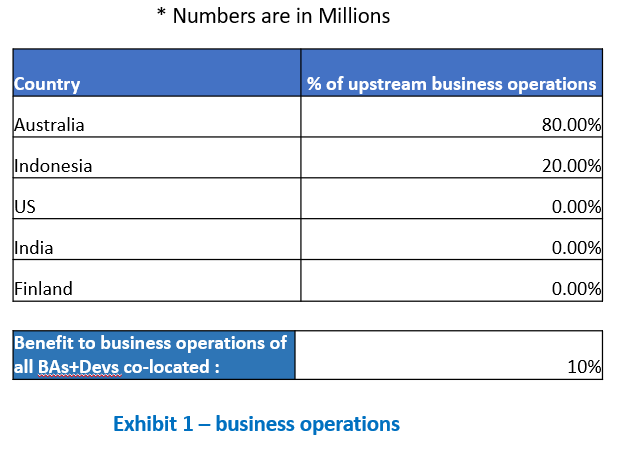
Our client’s upstream division has offices in Australia and Indonesia. Their work is highly dependent on their IT systems, as they have to constantly monitor wells and pipes (pressure, hydrocarbon count, fluid makeup, etc.)

The upstream division has two large legacies of IT systems that are primarily used for downstream operations but have been modified for upstream purposes.

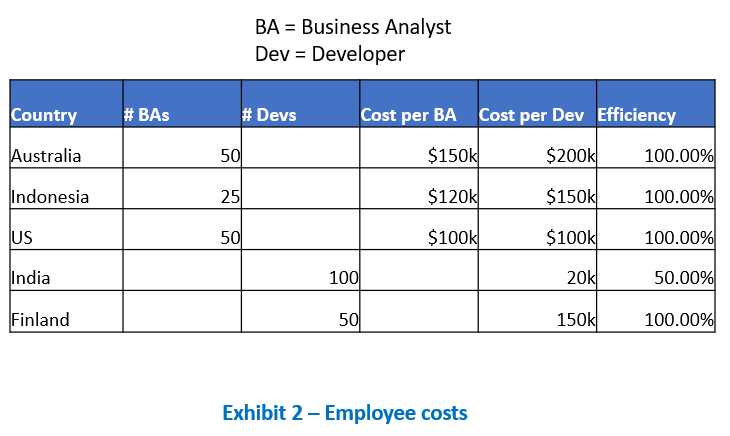
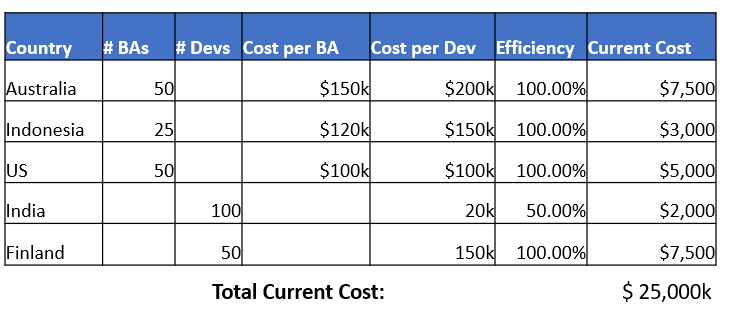
These systems are managed by a central team in the US which is responsible for all IT issues across the business. They triage issues/enhancements and then manage development teams in India and Finland who complete the work.

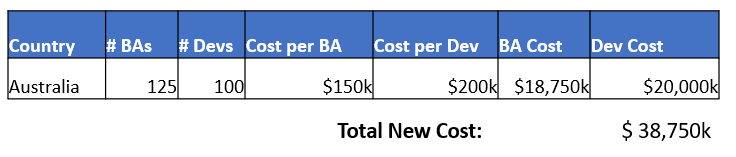
Overview of All Exhibits
Practice makes the difference
Practicing alone helps – with a partner it’s even better. Solve this case in a realistic mock interview.
Schedule on Meeting Board

I. Process Improvement - Part 1: Understanding Competitivity Issues

Show solution Hide solution

I. Process Improvement - Part 2: Understanding the Process

Show additional information Hide additional information
Show solution Hide solution

I. Process Improvement - Part 3: Solutions

Show additional information Hide additional information
Show solution Hide solution

II. Colocation

Show additional information Hide additional information
Show solution Hide solution

III. Conclusion

Show solution Hide solution
Practice This Case With Peers Who Are Currently Looking for Interview Partners.
Do you have questions on this case?
Ask our community and receive answers and tips directly from our experts.
Ask a question Ask a question
Related Case Interview Basics Articles
Information Technology Infrastructure Library (ITIL)
Common Terms of Business
The Information Technology Infrastructure Library (ITIL) is a globally recognized set of best practices designed to support the delivery of high-quality information technology (IT) services. Developed during the 1980s by the United Kingdom's Central Computer and Telecommunications Agency (CCTA), ITIL was born out of the recognition that organizations increasingly relied on IT, yet there was a lack of established practices to maximize IT's effectiveness.The CCTA, tasked with developing methods for more efficient and cost-effective use of IT resources, initially launched ITIL as a series of books, each one covering a specific practice within IT service management. Over time, the library expanded and was updated to keep pace with the fast-evolving world of IT, eventually becoming a comprehensive framework that outlines a set of detailed, interlinked processes for managing all aspects of IT infrastructure, development, and operations.The first version of ITIL, known as ITIL V1, was published in the late 1980s and early 1990s. It was followed by ITIL V2 in 2000, which brought a more process-oriented approach. In 2007, ITIL V3 introduced the service lifecycle concept. The most recent version, ITIL 4, released in 2019, expanded to include practices that align with modern digital businesses, including Agile, DevOps, and Lean.Today, ITIL is owned by AXELOS. It continues to provide a robust and adaptable framework for managing IT services, enabling organizations to navigate the complexities of the digital age worldwide. Its enduring success attests to its effectiveness in enhancing IT service management across various industries worldwide.Synonyms: While ITIL is the most recognized term for this framework, it is also occasionally referred to as "IT Service Management" or "ITSM."
To the article
Practice With Peers
Consulting Skills & Preparation
Preparing for case interviews is a crucial step for success in the consulting industry. These interviews are known for their complexity and the high demands they place on applicants. One of the most effective methods for preparing for case interviews is practicing with like-minded peers. PrepLounge offers excellent opportunities to find suitable interview partners for joint practice with the world's largest case interview community. This article highlights why practicing with like-minded peers is beneficial, how to optimally use PrepLounge's resources, and provides tips on how to get the most out of mock interviews.
To the article
The Influence Model
Useful Business Analysis Tools
The McKinsey Influence Model was developed in the early 2000s and is the result of extensive research and practical experience by consultants. Originally designed to help companies tackle challenges, the model has now established itself as an indispensable framework in the field of consulting.
To the article
Product Life Cycle
Useful Business Analysis Tools
The product life cycle is a way to map the common stages a product undergoes throughout its lifespan. The product life cycle is typically divided into 5 different stages, each having specific strategic decisions affecting profits and revenues.
To the article
Herzbergs 2-Factor Theory
Common Terms of Business
The Herzberg 2-factor-theory, also known as the two-factor theory or motivation-hygiene theory, was developed in the 1950s by Frederick Herzberg. Herzberg was an American industrial scientist and psychologist who taught as a professor at various universities. His research interests focused on what makes people satisfied at work.His theory aims at explaining and influencing motivation and satisfaction at work. It postulates that there are two distinct groups of factors that influence job satisfaction and dissatisfaction, and they have different effects on employees.Herzberg's research findings are also more relevant than ever in today's work environment, especially in light of the shortage of skilled workers, burnout, and in the debate about a 4-day work week.
To the article
Practice makes the difference
Practicing alone helps – with a partner it’s even better. Solve this case in a realistic mock interview.
Add invitation
Do you have questions on this case?
Ask our community and receive answers and tips directly from our experts.
Ask a question Ask a question