



Consulting Consulting
Back to overview
Expert case by
Ian

McKinsey Digital / BCG Platinion: Oil & Gas Upstream Technology

Difficulty: Advanced
Interviewer-led
4.3
< 100 Ratings
Times solved: 18.8k

Case Prompt:

[PLEASE NOTE: This is a technically difficult case and should only be completed by those coming in as a Technology specialist, i.e. recruiting for McKinsey Digital, BCG Platinion, etc.]

Our client is a multinational oil and gas company. While they are vertically integrated and have upstream, midstream, and downstream divisions, they have recently been experiencing competitivity issues in the upstream gas division, which brings in $1B in profits annually.

Our client’s upstream division has offices in Australia and Indonesia. Their work is highly dependent on their IT systems, as they have to constantly monitor wells and pipes (pressure, hydrocarbon count, fluid makeup, etc.)

The upstream division has two large legacies of IT systems that are primarily used for downstream operations but have been modified for upstream purposes.

These systems are managed by a central team in the US which is responsible for all IT issues across the business. They triage issues/enhancements and then manage development teams in India and Finland who complete the work.

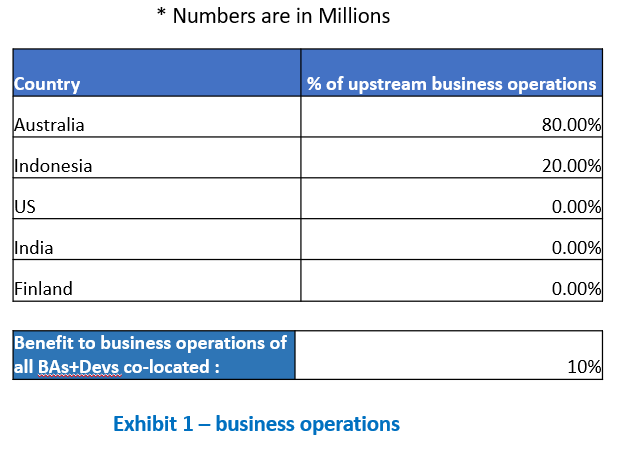
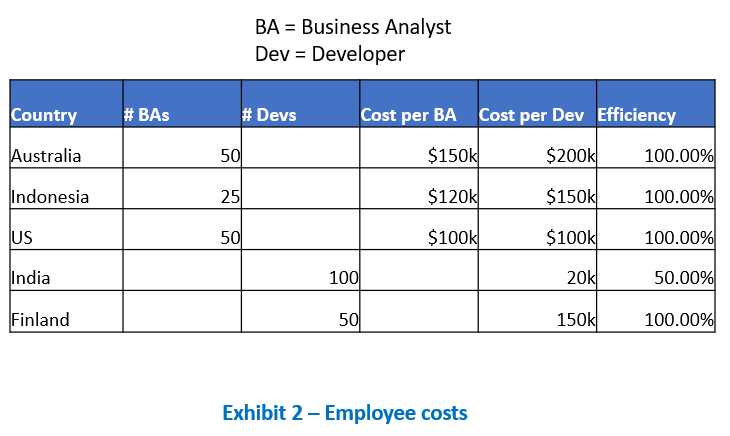
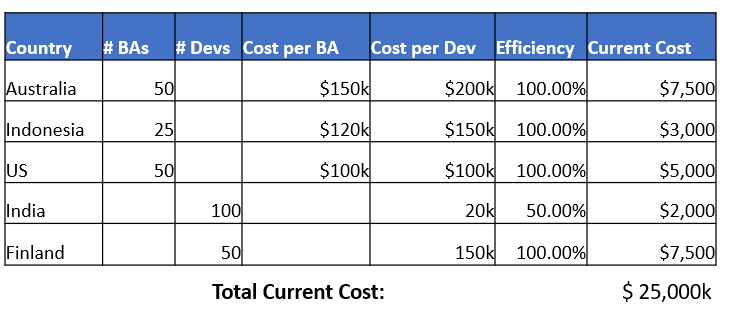
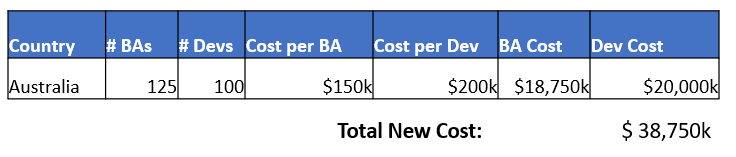
Overview of All Exhibits
Practice makes the difference
Practicing alone helps – with a partner it’s even better. Solve this case in a realistic mock interview.
Schedule on Meeting Board

I. Process Improvement - Part 1: Understanding Competitivity Issues

Show solution Hide solution

I. Process Improvement - Part 2: Understanding the Process

Show additional information Hide additional information
Show solution Hide solution

I. Process Improvement - Part 3: Solutions

Show additional information Hide additional information
Show solution Hide solution

II. Colocation

Show additional information Hide additional information
Show solution Hide solution

III. Conclusion

Show solution Hide solution
Practice This Case With Peers Who Are Currently Looking for Interview Partners.
Do you have questions on this case?
Ask our community and receive answers and tips directly from our experts.
Ask a question Ask a question
Related Case Interview Basics Articles
7S-Framework of McKinsey
Frameworks
If you're aiming for a career in consulting, learning about key frameworks is essential. One of the most popular and effective tools is the McKinsey 7S Framework. Created by McKinsey & Company, this framework helps you understand and evaluate how different parts of an organization work together to improve overall performance. In this post, we’ll explain the seven elements of the McKinsey 7S Framework and how you can use it in case interviews. Whether you're preparing for consulting roles or just want to boost your business knowledge, this framework is a valuable tool to have in your skillset!
To the article
The Tuckman Model
Common Terms of Business
At the core of comprehending team dynamics is the ingenious creation of Bruce Tuckman, the Tuckman Model. Bruce Tuckman, an eminent psychologist and researcher, introduced this model in 1965, and it has since been a fundamental framework for understanding team behavior and guiding team development. Tuckman, with his deep-rooted interest in group dynamics, recognized the evolution teams go through in their journey towards high performance. His model offered a lucid, linear path for this evolution, making it easily understandable and implementable in varied team environments. His ground-breaking work has led to profound shifts in how organizations manage their teams, promoting a more empathetic and result-oriented approach. Tuckman's model stands out as an insightful roadmap that helps navigate the complex maze of team development, and its utility spans multiple disciplines and industries. In a consultancy environment, the model is especially relevant due to the constant team reshuffling and the high value placed on effective teamwork. With consultants often stepping into pre-established teams, understanding the team's current developmental stage - whether it's forming, storming, norming, performing, or adjourning—is invaluable. By using Tuckman's model as a reference, consultants can quickly assess team dynamics, identify issues, and devise strategies to move the team towards the next stage. In essence, Tuckman's model provides a clear framework that can be used to maximize team effectiveness, making it a critical tool in the consultant's toolkit.
To the article
4P Framework
Frameworks
The 4P Framework – consisting of Product, Price, Place, and Promotion – is one of the fundamental marketing strategies that helps companies successfully position their products or services in the market, a classic task often encountered in case interviews. It provides a structured approach to consider all critical aspects of a product or service and ensure they are optimally aligned with customer needs. 💡 By the way: In our Case Interview Basics, you can find all the essential frameworks you need for case interview preparation. Check it out!
To the article
Theory of Planned Behavior
Common Terms of Business
Why do people make the choices they do? What drives individuals to engage in specific behaviors, whether it's adopting a healthy lifestyle, conserving the environment, or buying a product? These questions have intrigued psychologists and researchers for decades. One theory that has shed light on the complexities of human behavior is the Theory of Planned Behavior (TPB). Developed by Icek Ajzen in the late 1980s, the TPB provides valuable insights into how our intentions shape our actions. In this article, we'll delve into the core concepts of the TPB and explore its applications in various domains, helping us better understand the driving forces behind human behavior. If you understand this concept as a consultant, it can help to focus on a topic while working on a growth strategy or market entry case.
To the article
Correlation and Causality
Useful Business Analysis Tools
Correlation and causality are two important terms in statistics that are often confused with each other. In this text, the difference between the two is explained with understandable examples and related to the business consulting industry. Keep in mind that math is an important aspect of the case interview.
To the article
Practice makes the difference
Practicing alone helps – with a partner it’s even better. Solve this case in a realistic mock interview.
Add invitation
Do you have questions on this case?
Ask our community and receive answers and tips directly from our experts.
Ask a question Ask a question